

extract emails from word documents Windows offline tool Preview before save

Extract Emails from Word Documents

Extract emails from Word documents and DOC/DOCX files in bulk. Preview, filter, de-duplicate, and export clean email lists.

Offline processingYour exports are created on your Windows PC.
Focused filtersNarrow results before saving final output.
Clean exportSave structured output for reporting, backup, or CRM use.
Trial shows preview. Activation is required to save or export.
File Email Extractor

Use one focused workflow for extract emails from word documents with local preview, filters, and export.
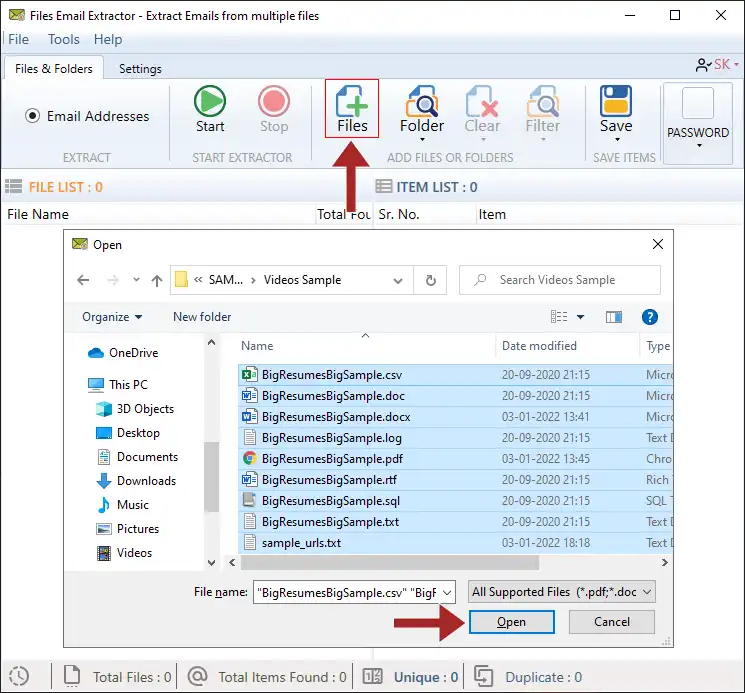
Extract Emails from Word Documents feature preview
ResumeContacts01.docxProposalEmails02.docClientNotes03.docxHRDirectory04.docSalesLetters05.docxVendorForms06.docEventContacts07.docxArchiveNotes08.doc
"ResumeContacts01.docx"
Word Files (*.doc;*.docx)
Sources: PDF, Word, Excel, CSV, TXT, HTML, folders

Why users need this workflow

Extract Emails from Word Documents is for teams that need clean email address lists from Word DOC and DOCX files without slow manual work. The main problem is not only finding data; it is keeping the output clean, traceable, and ready to use after extraction.

This page focuses on the exact intent to extract emails from word documents. It covers what gets captured, which filters matter, how preview helps avoid bad exports, and what the final output should look like before it is used in a real business workflow.

Exact intent match
Built around the specific workflow to extract emails from word documents, so the page answers the task directly instead of describing every product feature at once.
Less manual cleanup
Reduces opening documents one by one, searching for @ symbols, copying addresses, and removing duplicates manually, especially when the source set is large or repeated across projects.
Private local handling
Preview and export are handled on the Windows desktop, which helps when the source contains customer, staff, legal, or internal business data.
Export-ready output
Creates one clean list of extracted email addresses, optionally grouped by source file or exported for Excel and CRM tools, so the result is easier to use in Excel, CRM tools, audits, migration prep, or backup workflows.
What the tool saves
  • email addresses found inside Word DOC and DOCX files, with duplicate cleanup and export-ready results
  • Source context such as folder, sender, subject, date, file name, or mailbox when available
  • Duplicate-cleaned data for safer reporting and import
  • XLSX, CSV, and TXT email address lists
Focused extraction path Local Windows export

From messy source data to usable output

Load Word DOC and DOCX files, work with the right files or folders, preview what was found, and save clean email address lists with the context needed for reporting, backup, migration preparation, CRM cleanup, audit review, and operations work.
Select
Word DOC and DOCX files
Start
Run the scan so File Email Extractor can read the selected files or folders and prepare a preview.
Refine
file type selection, folder scope, unique-email cleanup, include/exclude patterns, and export format choice
Export
one clean list of extracted email addresses, optionally grouped by source file or exported for Excel and CRM tools
Preview first Remove duplicates Keep data local Ready for Excel or review
File Email Extractor box for extract emails from word documents

What gets carried through

email addresses found inside Word DOC and DOCX files, with duplicate cleanup and export-ready results stay tied to useful source context such as folder, sender, subject, date, file name, or mailbox where the source provides it.

Best use

  • Run smaller batches when archives are large.
  • Use filters before exporting, not after.
  • Preview the result so the saved file is clean enough for real work.

Step-by-step process

Follow this focused process for extract emails from word documents. The goal is to control source selection first, then apply filters, then preview, and only then export the final result.

Step 1: Open the right source
Load Word DOC and DOCX files and avoid mixing unrelated sources in the first pass. Smaller, focused runs are easier to verify.
Step 2: Select the right files or folders
Choose only the files or folders that match the use case. This keeps extraction faster and reduces irrelevant output.
Step 3: Apply intent-specific filters
Use file type selection, folder scope, unique-email cleanup, include/exclude patterns, and export format choice to remove noise before exporting.
Step 4: Preview and clean results
Review the preview, remove duplicates, and confirm that the source context is useful enough for follow-up work.
Step 5: Export locally
Save clean email address lists in the supported format for reporting, backup, migration preparation, CRM cleanup, audit review, and operations work.
Trial note: Trial supports preview. Saving/exporting requires activation with a license key.
Useful options
  • Preview before save
  • Duplicate removal
  • Date, folder, file, sender, or subject filters
  • Local Windows processing
  • Structured export formats
Common mistakes to avoid
  • Scanning every source at once before testing a smaller batch
  • Exporting before previewing duplicate or irrelevant records
  • Losing source context that may be needed for audit or follow-up
  • Using the wrong output format for CRM, Excel, or backup use

Real use cases

This page targets one exact search intent, but the output supports several practical business needs.

CRM preparation
Create cleaner lists before import or enrichment.
Private review
Keep sensitive data on the local Windows machine.
Audit and research
Turn scattered source data into searchable output.
Backup workflows
Save selected data locally for later reference.

Try File Email Extractor

Extract emails from Word documents and DOC/DOCX files in bulk. Preview, filter, de-duplicate, and export clean email lists.


Trial supports preview. Activation is required to save/export.
Need help?
Contact support if you want help choosing the right extraction workflow.
Contact Support

FAQ - Extract Emails from Word Documents

Quick answers for this exact workflow.

Open File Email Extractor, connect or load your source data, choose the folders or files, apply filters, preview results, and export the final output.

Yes. Processing runs locally on your Windows PC, so source files and exports do not need to be uploaded to a web service.

Yes. You can review extracted data before export so you can filter, remove duplicates, and confirm the output.

The trial lets you install the software and preview extraction results. Saving and exporting require activation with a license key.