

extract urls and metadata from files Preview before export Excel-ready output

Extract URLs and Metadata from Files

Extract URLs and metadata from files and folders. Scan documents locally, preview matches and export source-linked data rows.

Focused sourcedocuments containing URLs, tags, metadata, or structured text
Clean reviewPreview, filter, and remove duplicates before saving.
Useful outputURL and metadata exports with file names and context
Trial supports preview. Activation is required to save/export.
File Data Extractor

Use one focused workflow for extract urls and metadata from files with preview, filters, and export.
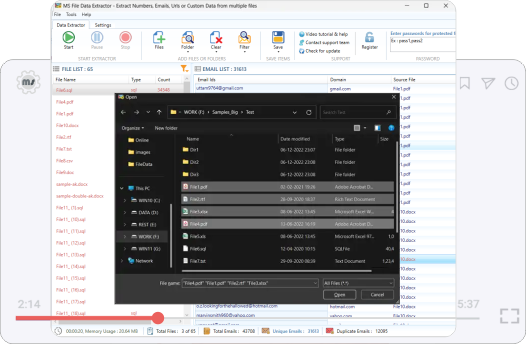
File Data Extractor app preview for Extract URLs and Metadata from Files
Sources: documents containing URLs, tags, metadata, or structured text

Why users need this workflow

Extract URLs and metadata from files and folders. Scan documents locally, preview matches and export source-linked data rows.

This page focuses on the exact intent to extract urls and metadata from files. It explains the source selection, what gets captured, how preview prevents noisy exports, and how to keep the final output useful for link audits, metadata cleanup, website migration checks, and document inventory review.

Exact intent match
Focused on this one extraction workflow instead of every product feature at once.
Less manual cleanup
Reduces copy-paste work and keeps source context attached to the result.
Clear source boundary
Files are processed locally on your Windows PC. Use documents you are allowed to process.
Export-ready output
URL and metadata exports with file names and context for link audits, metadata cleanup, website migration checks, and document inventory review.
What the tool saves
  • emails, phone numbers, URLs, dates, metadata, HTML tags, and custom Regex matches
  • Source context from documents containing URLs, tags, metadata, or structured text
  • Duplicate-cleaned rows for safer reporting and import
  • URL and metadata exports with file names and context
Focused extraction path Review before export

From source data to usable output

Start with documents containing URLs, tags, metadata, or structured text, scan for the matching data, preview what was found, remove duplicates, and export a clean list for link audits, metadata cleanup, website migration checks, and document inventory review.
Select
documents containing URLs, tags, metadata, or structured text
Scan
Run extraction for extract urls and metadata from files.
Refine
Preview, filter, remove duplicates, and keep source context.
Export
URL and metadata exports with file names and context
Preview first Remove duplicates Responsible use Ready for Excel
File Data Extractor product box for extract urls and metadata from files

What gets carried through

Matches, source context, and duplicate-cleaned rows stay tied to the reviewed output wherever the source provides them.

Best use

  • Run a smaller test before a large batch.
  • Use filters before exporting, not after.
  • Review source context before import or outreach.

Step-by-step process

Follow this focused process for extract urls and metadata from files.

Step 1: Choose the source
Add documents containing URLs, tags, metadata, or structured text that match the task.
Step 2: Run extraction
Scan for emails, phone numbers, URLs, dates, metadata, HTML tags, and custom Regex matches using the selected workflow.
Step 3: Preview and clean results
Review source context, remove duplicates, and filter unwanted entries.
Step 4: Export locally
Save URL and metadata exports with file names and context for link audits, metadata cleanup, website migration checks, and document inventory review.
Workflow note: Files are processed locally on your Windows PC. Use documents you are allowed to process.
Useful options
  • Preview before save
  • Duplicate removal
  • Source context retention
  • Excel, CSV, and TXT export
Common mistakes to avoid
  • Starting with too broad a source set
  • Exporting without checking source context
  • Mixing reviewed and unreviewed results
  • Assuming every match is ready for production use

Real use cases

This page targets one exact search intent, but the output supports several practical business needs.

CRM preparation
Create cleaner lists before import or enrichment.
Manual review
Keep source references so results can be checked before use.
Research cleanup
Turn messy sources into structured data rows.
Reporting
Create Excel-ready output for team review.

Try File Data Extractor

Extract URLs and metadata from files and folders. Scan documents locally, preview matches and export source-linked data rows.

Trial supports preview. Activation is required to save/export.
Need help?
Contact support if you want help choosing the right extraction workflow.
Contact Support

FAQ - Extract URLs and Metadata from Files

Quick answers for file data extractor workflows.

File Data Extractor extracts emails, phone numbers, URLs, dates, metadata, HTML tags, and custom Regex matches from PDF, Word, Excel, CSV, TXT, HTML, and folders.

Yes. Preview, filter, remove duplicates, and confirm source quality before saving the final file.

Use Excel, CSV, or TXT output depending on the workflow and downstream review needs.

The trial lets you install the software and preview extraction results. Saving and exporting require activation with a license key.